
You wouldn’t dress for an interview in jeans, a T Shirt and trainers, would you?
Many years ago, I was part of an interview panel alongside two other managers. We were preparing for our next candidate; a young man of 18 or 19. Imagine our surprise when he entered the interview room wearing jeans, T-shirt and dirty trainers!
Before anything was said the HR manager quickly stepped in and tactfully brought to the individual’s attention the fact that he was inappropriately dressed for an interview.

He asked the lad why he had chosen to dress the way he had, and also pointed out those dirty trainers! He explained that the job advert had been clear that the role applied for required the successful applicant to wear a uniform and that whilst doing so they would be an ambassador for the company. He informed the young man that it was expected that interview candidates dress to show they understood this.
The young lad responded by saying that because he didn’t own a suit or any smart clothes, he had simply chosen to wear what he had.

The HR manager kindly explained how the panel were not only looking for someone who would be able to maintain a uniform, but also somebody resourceful that can think on their feet. Someone capable of resolving issues and problems and who could adapt to a situation, like sourcing appropriate attire for an interview.
It transpired that the young man had a brother who was the same size as him who would be willing to lend him something more suitable. He was offered the opportunity to be interviewed again later that very same day, given that he came dressed more appropriately.
Unfortunately for that particular young man, despite reappearing for his interview dressed more suitably and satisfactorily, was not selected for the role. He simply wasn’t able to meet the other criteria the role demanded, but the point I make is that many would not even be given a second chance.
First Impressions

The first 5 seconds of meeting the interview panel are paramount in creating a positive and lasting impact. In this case, the young man was very fortunate that the HR manager stepped in when he did and gave him a chance to rectify his choice of interview apparel.
It’s fair to say that most prospective employers would not be quite so generous.
If you’ve got as far as an interview, you’ve no doubt jumped through many hoops already. You’ve researched the organisation, prepared for those awkward questions, completed the online exercises, and done all the swotting up necessary. You’ve already done a fabulous job to get this far.
Now is your final opportunity to impress the interview panel and secure that job!
Make no mistake the interview process is still an extremely competitive environment. To make a favourable impression you need to bring all your tools and knowledge to bear to ensure it’s you who’s the successful candidate. Here’s how to ensure you hit the right note with the interview panel.
Prepare
Consider travelling to where the interview is to be held in advance.
Plan how best to travel to the venue and work out how long it will take you to ensure you arrive unhurried and in plenty of time on the day.
Familiarise yourself with the location where the interview will be held. In other words, ‘do a reconnaissance’.

Dress Appropriately For The Environment

Visiting the venue during normal work hours will give you more of an idea of what other people are wearing to do their normal day’s work.
Are people wearing a business, smart casual, or a more relaxed casual style?
If you know somebody who works there, it would be wise to ask them if there is a dress code and find out how people generally dress, so you can dress appropriately.
Different work environments obviously dictate different looks. These looks are normally categorised as formal business, smart casual and casual.
I have created a fourth category to account for the gap between the formal business and smart casual look called the informal business look.
The Formal Business Look
For that quintessential formal business look:
- Choose a tie in muted tones in a conservative design
- Wear your tie with a Windsor or half Windsor knot
- Wear a white shirt with double cuffs. A white shirt is always best for an interview
- Navy or Charcoal suits are ideal for interviews. A matching dark coloured plain or pinstriped two-piece or three-piece suit looks great
- Always wear plain dark socks, the same colour as the suit
- Avoid wearing patterned socks, or socks with logos or pictures on them
- A pair of black Oxfords or Derby shoes look great for the interview setting in a formal business ensemble
- Avoid wearing slip-on shoes or loafers
- Keep jewellery simple and subtle. If you are going to wear a watch with a leather strap, then ideally it should match the colour of the shoes. The colour of the watch face should match the jewellery on the finger (yellow gold ring then wear a watch with yellow gold)
- Wear subtle cufflinks if you are going to wear them and as for the watch, match the colour of your jewellery
- Avoid wearing beads and bracelets


The Informal Business Look
The idea is to create a more relaxed version of the formal business look, making it a little bit more flamboyant overall. You can achieve this look by:
- Wearing a more colourful or patterned tie
- Wearing a coloured shirt
- Wearing more relaxed shoes such as loafers, slip-on shoes, or a pair of brogues
- If you like you could possibly wear more colour in the socks
- wear a more colourful pocket square
- wear more of a statement watch, ring or cufflinks


This category also accommodates formalising the smart casual look and bridges the gap between the smart casual and the formal business look.
The Smart Casual Look
This category is vast in nature and is best described as being neither overdressed nor underdressed. Wearing a smart casual look means that you are appropriately dressed for a casual occasion. Occasions like meeting friends for drinks, or going out for a light lunch or meal with work colleagues. This look can be worn for or day to day wear in the office, if the dress code accommodates it of course.
To pull this look off you might:
- Wear a smart jacket like a black blazer or tweed jacket coupled with a casual shirt. A buttoned-down collar (an Oxford shirt), striped shirt or delicately patterned shirt are ideal.
- The jacket can also be worn with a roll neck jumper.
- Wear a pair of chinos or casual trousers
- Avoid wearing shorts
- A pair of brogues, loafers, monk shoes, deck shoes or even a pair of Chelsea boots look fantastic with this look
- Avoid wearing trainers
- If you wear jeans – wear darker jeans
- No tie is needed for this look
A smart casual look can be transformed into an informal business look by adding a tie, a pocket square, and more formal dress trousers.


The Casual Look
For this look, a jacket is not really required. However, a jacket like a Harrington or a wool bomber jacket creates a great casual look if a jacket is needed.
- In cooler weather wear a jumper or roll neck jumper
- If wearing a shirt choose a polo shirt or a patterned shirt with either long or short sleeves
- Avoid wearing anything with logos or slogans for an interview
- Wear a pair of casual trousers, such as a pair of checked trousers, some chinos or a dark fitted pair of jeans
- For footwear wear a pair of loafers, suede shoes, pair of Chelsea boots, chukka boots or desert boots for a great look
- Avoid wearing trainers


Matching Your Look To Your Potential New Role
If you’re going for a job where a suit needs to be worn, You’ll need to wear a formal business or informal business look. A simple ‘reconnaissance’ of where you hope to be working will help to ascertain which look would be more appropriate.
If you know the post will require you to wear a uniform, bear in mind that whilst you’re wearing it, you are representing that company. At interview, you’ll need to demonstrate that you are aware of this and that you can look after the company’s uniform. Wear a formal or informal business or at the very least a smart casual look for this interview. Remember to clean those shoes and iron your shirt.
If you are looking to work in an environment where jeans and T-shirts are the norm, it would be wise to wear a smart casual look for the interview.

It would be appropriate to wear a tweed suit or jacket if you are applying to work on a farm or an estate, as this is typically country attire and would be fitting for the work environment.
Jewellery and Aftershaves
In general, don’t overdo the jewellery, keep it subtle and keep it simple. A watch, signet ring and possibly cufflinks will normally suffice.
Wearing a larger amount of jewellery is acceptable and even welcomed if it fits with a businesses image, for example tattoo artists or barbers encourage certain looks.
Remember the golden rule, and match your attire to the work environment of the job you are applying for!


When it comes to wearing aftershave and using deodorants, all I would say is be careful not to overpower the senses. Wearing too much can be counter productive and not everyone has the same taste in what they think smells good.
You want your prospective employer to remember you for your skills, talents and what you will bring to the role and not as ‘the candidate that wore way too much aftershave’. Use aftershave sparingly.
Conclusion
Procuring any position in the world of work is not easy and is incredibly competitive. Candidates are successful and looked over and positions are won and lost over the slightest of considerations. Wearing the appropriate attire for any interview may well just give you that edge you need over your competitors to convince the interview panel that you are the right man for the job.

The final checks in preparation of that interview…
Have you ironed that shirt – checkout this simple and straight forward tutorial.
Have you cleaned your shoes – check out this no nonsense video on how to clean a pair of shoes
Have you used the correct tie knot – check out how to tie 5 different types of tie knot
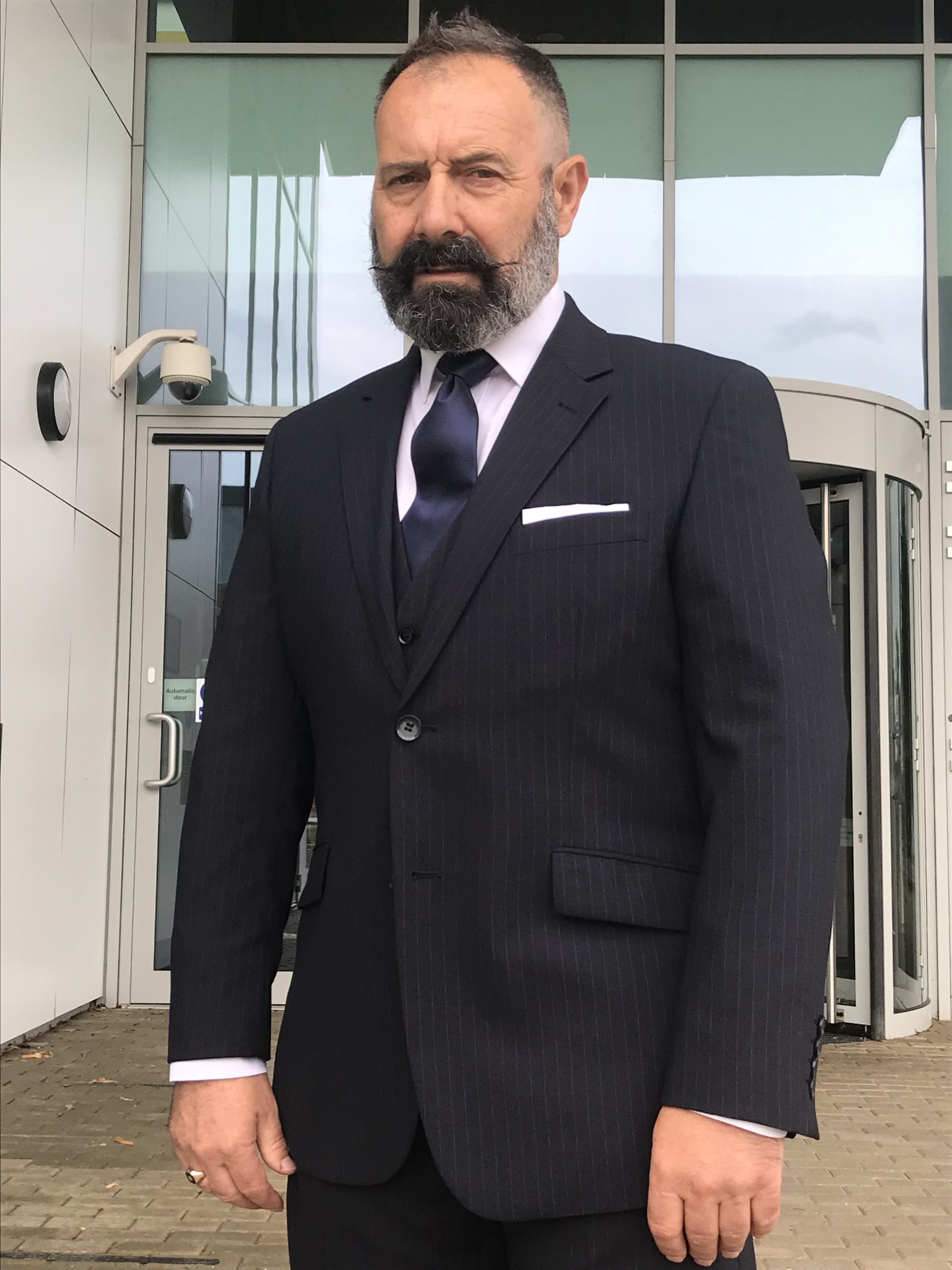
Chris Andrews is a classic men’s style advisor helping people realise a more refined look by instilling the lost skills and understanding of classic men’s attire.
Thanks!
You Are welcome.